[CW: child murder, body horror and dismemberment, cannibalism, psychological abuse of a child, and graphic revenge]
I’m not going to lie, y’all. This is as explicit as the Grimm catalog gets. It’s closer to horror than fairy tale, with almost none of the darkness softened or left offscreen. Reader discretion is advised.
Aarne-Tompson-Uther Index type 720: From the Juniper Tree
Ok, so this one is a lot, and it’s surprisingly long for a Grimm tale. So, I’m going to do a synopsis of the story and then we’ll break down some of the themes. Be prepared though, that this post will be much longer than the usual fairytale jaunt. You’ll understand why, soon enough.
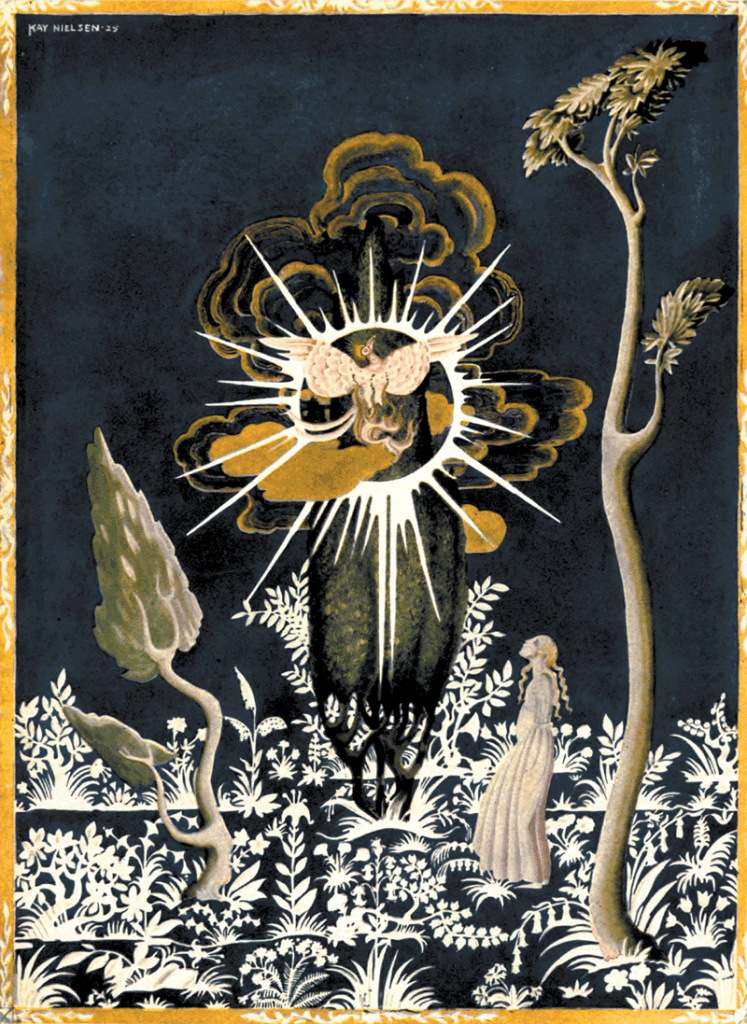
As with many fairytales, this one starts with a couple who desperately wants a child, but can’t seem to seal the deal. Eventually, one winter, the wife is peeling an apple beneath a juniper tree when she pricks her finger, and her blood falls onto the snow beneath the tree. As her blood drips out, she prays for a child that is white as snow and red as blood.
Upon saying that, her mood changed, and she became very cheerful, for she felt something might come of it. Then she went home.
Six months later, the wife becomes incredibly ill from eating juniper berries. She asks the husband to bury her beneath the tree if she should die. A month after that, she gives birth to a baby boy that is, indeed, as white as snow and as red as blood. She’s so happy about this that she just… dies. She dies of happiness, y’all. And the husband keeps his promise and buries her beneath the juniper tree.
Eventually, the husband remarries, and he and his new wife have a daughter, whom they name Marlene (the only named character in the story, oddly enough). As I’m sure we can all see coming, the new wife loves Marlene deeply, and has no love at all for her stepson. She abuses him regularly and speaks openly about wanting her daughter to inherit, and not him.
Gradually the devil took hold of her and influenced her feelings toward the boy until she became quite cruel toward him: she pushed him from one place to the next, slapped him here and cuffed him there, so that the poor child lived in constant fear. When he came home from school, he found no peace at all.
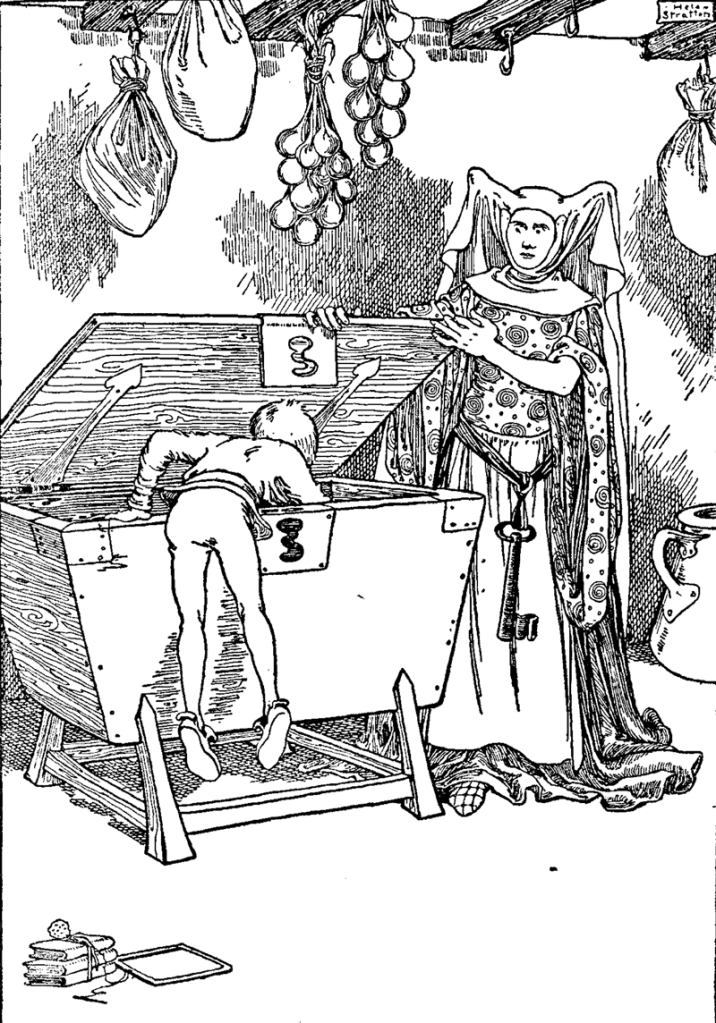
And then, one afternoon, driven by these whisperings from the Devil, she lures the boy into a room with a trunk, promising him that there’s an apple in the trunk for him. He goes for it, she slams the lid, and his head flies clean off, y’all. Just full-on decapitation.
Ok, so, things are about to get way worse. The stepmother uses a “bandage” to attach the boy’s head to his body and props him up on a chair, outside, a damn apple in his lap. Y’all. And then Marlene comes home, sees the apple, and asks for one. He doesn’t answer her, obviously, and her mother… her mother tells her to box his ears.
If you don’t know what this means, you’re not alone. It’s not a common phrase anymore. It literally means to smack someone on one or both ears. I’m gonna guess that you can guess what’s about to happen.
So she gave him a box on the ear, and his head fell off. The little girl was so frightened that she began to cry and howl. Then she ran to her mother and said, “Oh, mother, I’ve knocked my brother’s head off!” And she wept and wept and couldn’t be comforted.
As expected, Marlene spends the rest of the day crying while her mother dismembers her brother and cooks him into a blood soup. She then tells the father that the boy is staying with his great-uncle, and feeds the father the soup. The father says it’s the most delicious soup he’s ever eaten and later, Marlene buries the bones beneath the juniper tree, sobbing all the while.
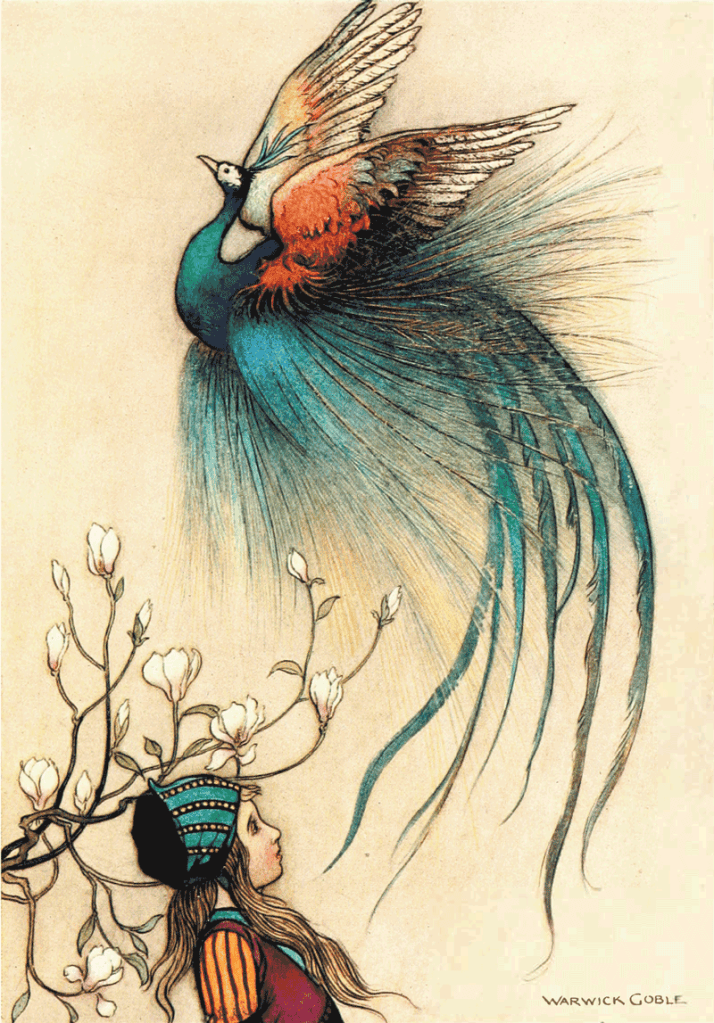
But wait! There’s more! A mist builds around the juniper tree and then a bird flies out and wings towards the town. It sings about the boy’s murder to the townsfolk and manages to captivate a goldsmith, a shoemaker, and a miller with his beautiful song about infanticide.
“My mother, she killed me.
My father, he ate me.
My sister, Marlene, she made sure to see
my bones were gathered secretly,
bound nicely in silk, as neat as can be,
and laid beneath the juniper tree.
Tweet, tweet! What a lovely bird I am!
They give him–respectively–a gold chain, a pair of red shoes, and a millstone. The bird returns to the house and gives the gold chain to the father and the red shoes to Marlene. And the millstone, well…
As the bird is hanging out, giving out gifts and singing about the wrongs done, the stepmother begins to flail about, clearly in distress. She finally runs out of the house, at which point the millstone falls slap on top of her, causing flames and smoke. The brother is left standing in the middle of the wreckage. And then the brother, father, and Marlene all go back inside and have a lovely dinner. The end.
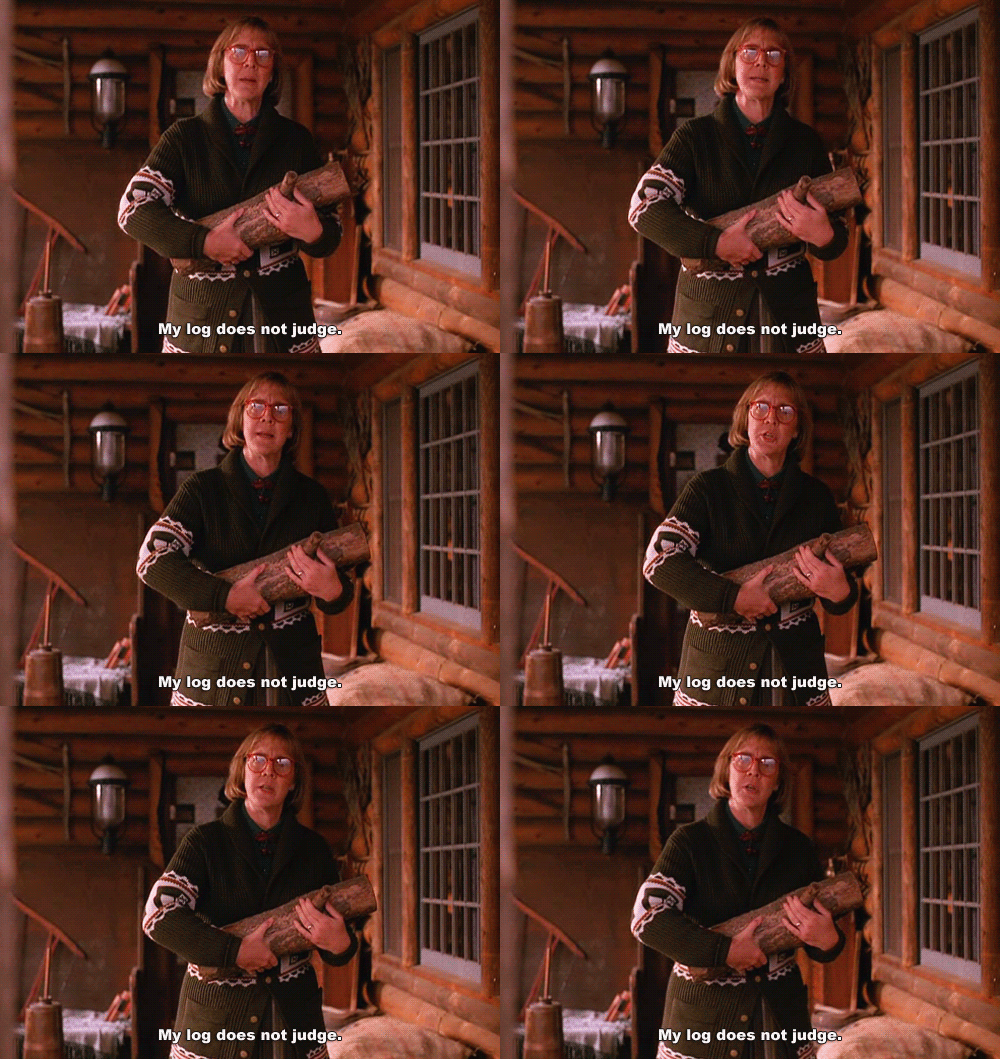
So… how’re y’all doing? You ok? It was a helluva ride, with the usual abrupt ending, right? Well, buckle up, kids! We have analyzing to do! And I would like to apologize for the depths I’m about to go into but it can’t be helped. So many of the Grimm tales that we deal with seem almost devoid of analytical value, but this one, in many ways, has almost too much to analyze. It’s like a David Lynch movie. There’s a eleventy-billion things happening and you aren’t sure which ones actually matter, and which ones are just in there to mess with your head…
Now, most of the evil-stepmother tales in the Grimm collection run on a kind of fairy tale shorthand in that she’s cruel because the genre needs her to be, and that’s as far as the story bothers to ask. The Juniper Tree doesn’t let you off that easily, though. This one gives its villain an actual, grubby, entirely mundane motive: her stepson stands to inherit everything, and her own daughter stands to inherit nothing. That’s it; that’s the whole engine. If you strip away the supernatural dressing, what’s left is a story about blended-family inheritance anxiety that somebody decided to resolve with an apple-chest lid and a stew pot.

What makes the violence land as hard as it does isn’t the gore itself, honestly. It’s how procedural she is about it, right? She doesn’t fly into a rage and lose control. She’s very calculated. She sends her own daughter to fetch the apple, and then she frames the murder as an accident. She then turns him into dinner specifically so there’s no body left to explain his absence. This is a woman executing a cover-up, not a monster having an episode, and that’s arguably the scarier version of “evil stepmother.” She’s not a woman ruled by malice, but one ruled by arithmetic.
And then there’s everyone around her, which might be the part of this story I actually find the most damning. The father eats his own son and says it’s delicious. He doesn’t know, sure, but the story doesn’t let the rest of the world off either. When the bird finally sings its accusation out loud, in public, to strangers–this is a murder confession set to music–nobody investigates. They just ask for an encore. The whole town hears a literal indictment and responds by requesting the song again because they liked the tune. That’s not an oversight in the plotting, that’s the story telling you exactly how far “it’s beautiful, more please” can get in place of “wait, what did that bird just say.”

Marlene is the one character this story actually seems to feel sorry for, and I think that’s deliberate. She’s a child weaponized against another child. She’s sent to get the apple, told to strike her brother, made complicit in something she clearly doesn’t want any part of, and then left to sob through her stepmother’s cleanup while understanding, on some level, exactly what just happened. Her one act of agency in the entire tale is gathering her brother’s bones and burying them under the juniper tree while crying over them.
And it’s worth noticing that this is the single moment the story allows itself to go fully fantastical. Everything up to that point is horrifyingly plausible. The magic only shows up once a child’s grief is involved, which feels like it’s saying something about what it actually takes to set this kind of wrong right. Ordinary cruelty doesn’t require magic to happen but reversing it apparently does.
The symbolism underneath all of this is doing more work than it looks like at first pass. The juniper tree itself belongs to the first mother, the dead biological one, who asked to be buried beneath it before she died. So, from the very first page, the tree is already coded as the space where the “real,” rightful maternal presence lives on, in direct opposition to the woman who replaces her. The apple that kills the boy echoes straight back to Eden, and it’s hard not to read the stepmother as a deliberate echo of that older temptress structure, offering fruit and causing a fatal fall. The millstone that finally kills her, dropped by the bird, carries its own biblical weight too; it’s hard to miss the echo of Luke’s warning about what should happen to someone who harms a child. None of this is subtle once you’re looking for it, and I don’t think the story wants it to be. It’s borrowing scripture’s own vocabulary of sin and punishment and handing it to a bird.
Whether the ending actually counts as justice is where I keep landing differently depending on the day. The boy comes back and the stepmother dies, graphically, by her own fear made manifest. The family that’s left–father, son, Marlene–gets its happy reunion. But it’s worth sitting with who doesn’t get resolution here: Marlene spends the entire story being used as a tool against her own brother and then is just… absorbed back into a happy ending, as though being coerced into complicity in a murder is something a child bounces back from. The story isn’t interested in her trauma. It’s interested in the villain’s punishment and the hero’s return, and Marlene’s suffering is only ever useful insofar as it serves the plot she’s not actually the protagonist of.
That’s also, I’d argue, what separates this tale from the Hansel-and-Gretel school of child-endangerment stories, where the kids get to save themselves and walk away intact. This one belongs to an older, colder lineage. I mean, the mothers-who-serve-their-children-as-food tradition goes back through Procne and Philomela, through Medea, long before the Grimms ever got their hands on it. The Juniper Tree isn’t a cautionary tale about wandering into the woods, like many of the Grimm tales. It’s a story about what happens inside a house, between people who are supposed to protect each other, when inheritance and jealousy get to do the deciding. The forest was never the dangerous part in this equation; the kitchen was.

Sources:


