St. Martin’s Day and Light in the Dark
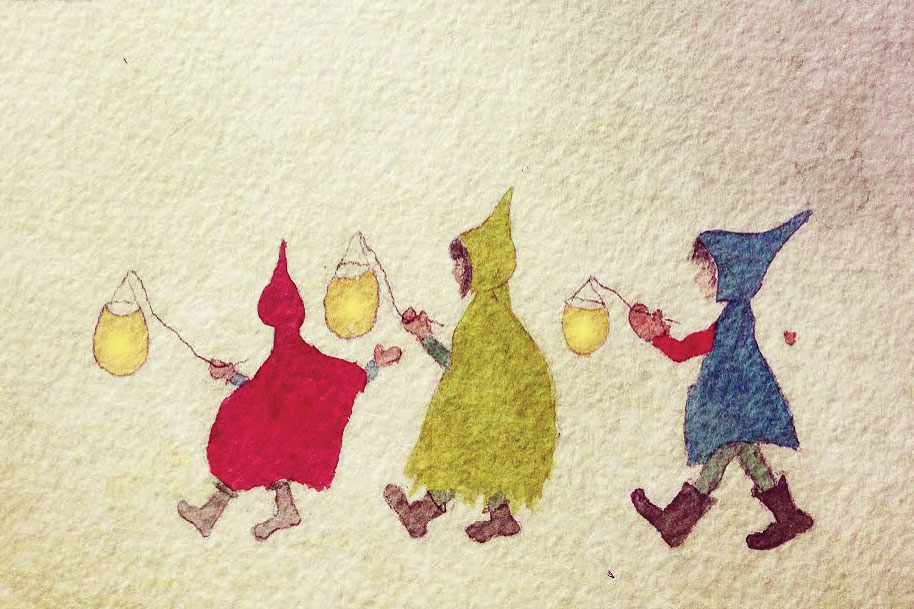
St. Martin’s Day–Martinmas, if you want the older English name–falls every year on November 11th, and it’s one of those holidays that barely registers in the U.S. but is a genuinely big deal across Germany, Austria, and the Low Countries. It’s nominally a Catholic feast day honoring a 4th-century Roman soldier turned bishop, Martin of Tours, but what it actually looks like on the ground is quite different. Children walk through darkened streets after dinner, carrying paper lanterns they made themselves, singing songs, often trailing a man on horseback dressed as Martin in a red cloak. There’s usually a roast goose involved somewhere too.
Now, nobody actually knows why this holiday involves children walking through the dark with handmade paper lanterns and singing songs about them. I don’t mean, like, it’s sort-of vaguely unknown, though. I mean it is genuinely, documentably unclear, according to the people who study it. I love that more than I’d love a tidy answer, and y’all know I hate a tidy answer.
So, the saint himself is solid ground, at least. The part of the story that everyone is hung up on is the cloak: as he was riding through a gate in winter, Martin found a freezing beggar, cut his own military cloak in half with his sword, and gave the man one side. That night, he dreamed of Christ wearing it. He went on to become a bishop, reportedly against his own wishes. I mean, he hid himself in a pen of geese to avoid the honor, until their cackling gave him away. Which is, incidentally, why goose became the traditional Martinmas meal. The birds that ratted him out have got themselves eaten for it, every November 11th since. And honestly, fair. Geese are aggressive and violent beasts who deserve what they get. I said what I said.
The timing is where this stops being a tidy saint’s-day story and turns into something older and more practical. November 11th sits right at the hinge of the farming year across a huge stretch of Europe; the harvest was in, and livestock that couldn’t be fed through winter got slaughtered and preserved around this time. The Old English name for this month, Blōtmōnaþ, literally means “sacrifice month,” which is a fairly unsubtle hint about what was happening to the animals. Folklorist Martin Walsh has argued the whole festival carries pre-Christian seasonal roots layered under the Christian saint’s name. It was an actual turning point in the year that the Church calendar settled onto rather than one they invented from scratch.

So where do the lanterns come in? Here’s the honest answer: scholars studying the tradition say the connection between “man shares cloak with beggar” and “children carry lanterns through the streets” simply doesn’t follow logically from the legend, and nobody has pinned down exactly how one produced the other. The leading theory is that the lanterns are a tamed-down descendant of Martinsfeuer, the bonfires that were once lit across the Rhineland for this feast in such numbers that the day earned the nickname “spark day.”
A big community bonfire, carrying the old idea of holy light pushing back the dark, eventually got handed down to children as something smaller and safer to carry themselves, a paper lantern instead of a blaze. It’s also worth noticing that St. Martin’s Day isn’t alone in doing this; it falls into the same instinct behind Hanukkah, St. Lucy’s Day, Diwali, and Loi Krathong. When the nights get long enough, a lot of unrelated cultures independently decide the correct response is to go outside and carry fire around.
Whatever its exact lineage, what’s actually practiced today is genuinely lovely because kids from kindergartens and schools across Germany, Austria, and the Low Countries walk out after dark with lanterns they made themselves, often walking behind a horseman in a red cloak who is playing Martin. As they do this, they sing songs like “Laterne, Laterne” into streets that get steadily darker as autumn tips into winter. It’s not a story about scarcity or fear of the dark. It’s a story about a man who, faced with someone who had less than he did, cut what he had in half without being asked. The lanterns, however they actually got there, feel like the right shape for that to have taken; small, carried, shared light, right when the year needs it most.

Sources


