
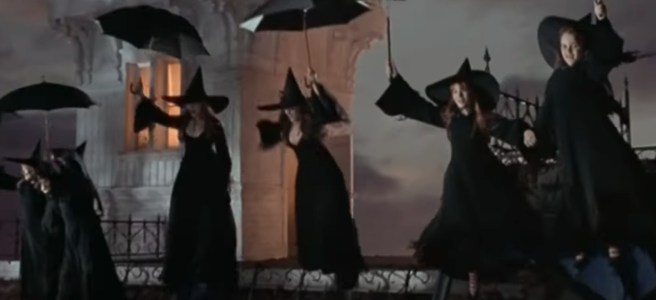
Here’s a little thought exercise: close your eyes and picture a witch. I’d bet top dollar that you’re seeing green skin, a black pointed hat, and a broom. Basically, the Halloween-store cosplay of a woman who never actually existed. The real history of “witches” is a lot stranger and a lot less costume-shop than that though, and it’s really more like three or four different creatures in a folklore trenchcoat.

Let’s start with the people that history actually called cunning folk, because they’re the ones pop culture has almost entirely erased. From the medieval period and on into the 20th century, Britain was full of working, semi-magical practitioners–wise men and women, “white witches,” pellars–who did a brisk trade in healing, finding lost property, fortune-telling, and, especially, countering witchcraft cast by someone else.
Historian Owen Davies estimates that there were several thousand of them working in England at any given time right up until the mid-1800s. About two-thirds were men, but the women among them did just as well. Some built genuinely independent, respected positions in their communities, which was not a small thing for a woman to have in this period. Crucially, ordinary villagers didn’t lump them in with “witches” at all: witches were understood as people who did you harm; cunning folk were the ones you paid to undo it. And Ronald Hutton has made the point that this kind of cunning craft didn’t really die out so much as get absorbed into later magical traditions; it dissolved rather than disappeared.

And then there’s Baba Yaga, who refuses to sit still in either category. She’s first recorded in print in 1755, in–of all things–a Russian grammar textbook, though she’s almost certainly far older than that in oral tradition. Depending on which tale you land in, she’s a child eating horror, a death goddess, or a gatekeeper who hands the heroine exactly what she needs to survive.

Scholar Andreas Johns, who has written the major academic work on her, argues that she works less like a villain and more like the hinge that the story turns on. She’s dangerous, yes, but she’s also the one who makes the hero’s transformation possible. So, more like a threshold, rather than a cautionary tale.
So, if the cunning folk and Baba Yaga don’t give us the pointy hat, where did that actually come from? This is where it gets genuinely uncomfortable. Dress historians trace two tangled threads, the latter of which is considerably darker than the former:
- Tall, black, wide-brimmed conical hats were just ordinary women’s fashion across England through much of the 1600s–and they were especially associated with Quaker women, who scandalized authorities by preaching and claiming spiritual equality with men, and who were, not coincidentally, sometimes accused of witchcraft themselves.
- After 1215, a papal decree required Jews in parts of Europe to wear identifying conical caps, the Judenhut, in public. That imagery circulated in continental art for centuries, and some historians argue that it was later recycled onto “witches,” especially once Jewish resettlement in England coincided with the rise of the Quakers in the mid-1600s.
Two groups that were viewed with the same suspicion, visually merged into one stock villain. The hat on your Halloween decorations, in other words, may be wearing two different histories of persecution at once, with the actual folklore nowhere in sight.
Which is the real point of this post, I think. The “witch” you’re picturing isn’t a folklore figure at all. She’s a costume stitched together out of fashion history, religious persecution, and a flattening of several completely different kinds of women–the useful ones, the mythic ones, the merely unconventional ones–into a single, scary shape. The real figures underneath her are so much more interesting than that hat.
Sources
- Baba Yaga — World History Encyclopedia, drawing on Andreas Johns, Baba Yaga: The Ambiguous Mother and Witch of the Russian Folktale (Peter Lang, 2004)
- Cunning folk in Britain — Wikipedia, summarizing Owen Davies’s and Ronald Hutton’s research
- The Pointy Witch Hat Has a Complicated, Problematic History — History.com, citing dress historian Abby Cox and Amelia Mott Gummere’s The Quaker: A Study in Costume (1901)


