Why Autumn is Storytelling Season…

I’ll be completely honest in admitting that this blog has been super quiet for way too long. But, in my defense, life got really loud, which pulled my focus away and, somewhere in there, my writing habits slipped sideways. But! October is here and the light is doing that low-gold thing that it does in the afternoons which turns my thoughts to scarecrows and witches and that particular hush that falls over a house once the porch light goes on. So, we’re going to give this another go, and where better to start than by the fire as we enter the dark half of the year?
Because here’s the thing about the combination of autumn and storytelling: it isn’t really a coincidence. Across an enormous range of cultures, completely independent of one another, storytelling season and harvest season are one in the same. There’s a practical reason for this, and a reason that’s a bit more strange, but I think you need to know both to understand why we’re all still here, telling stories in the gathering dark.

The practical reason is almost boring, in the way that the truth often is: the fields are in and laid to rest for the coming winter. For most of human history, autumn was when the backbreaking, daylight-devouring work of growing and gathering food finally let up. The last sheaf of corn was cut, the harvest was stored, and suddenly people had something that they hadn’t since spring–long evenings with no urgency to them. Add to that the fact that the nights are stretching out and getting cold enough to drive everyone indoors, and you have the original captive audience: a household gathered around a single light source with several idle hours to fill. Storytelling didn’t need to compete with anything. It was the evening’s entertainment, the only one available, night after night, for months.
But the folklore-y reason is the one that actually gives me (and I’m sure many of you) the chills: people didn’t just tell more stories in autumn, they told SCARY ones. The ones where the dead walked, doors are opened that should have stayed closed, and the thing in the woods might just know your name.
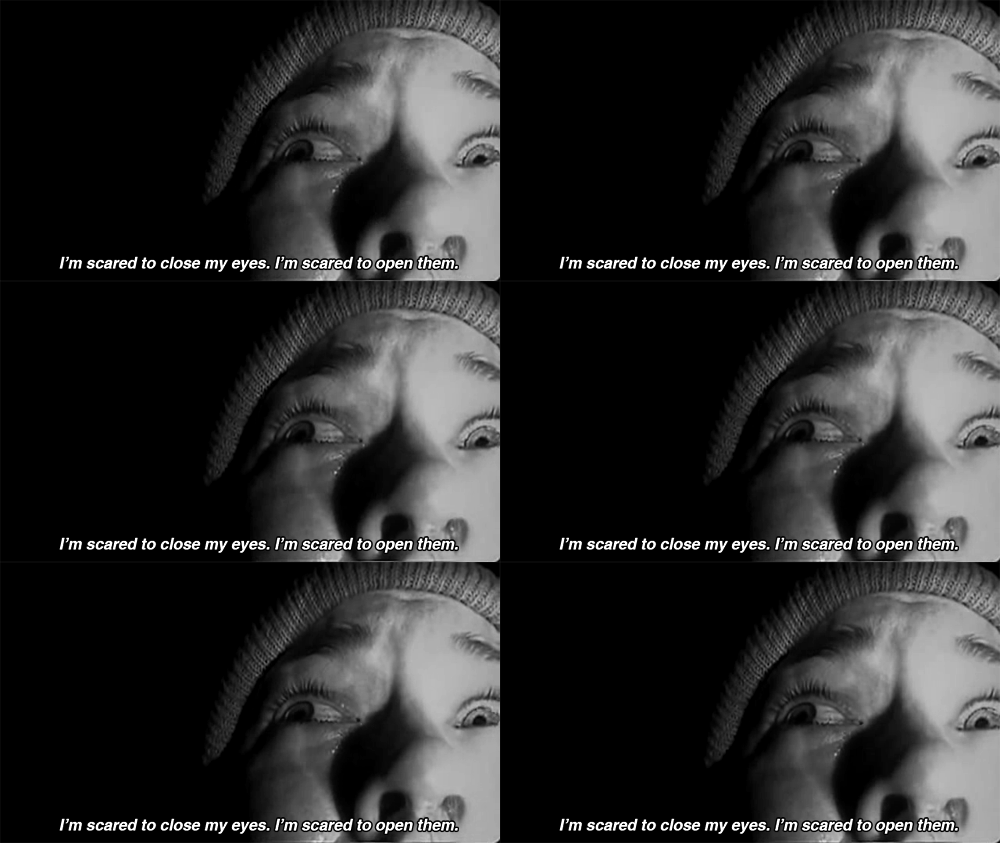
Samhain and its descendants mark the point in the Celtic calendar where the boundary between this world and the otherworld was said to go thin–porous enough for spirits, ancestors, and things with no good intentions to slip through. And this wasn’t a fringe belief that was spun out of one culture. Variations show up again and again wherever the agricultural year ends in autumn: a sense that as the natural world visibly dies back and the membrane between the living and whatever comes next gets a little less solid. Telling a ghost story by the fire wasn’t just entertainment. It was a way of naming the thing that everyone already felt in the dark outside the door–and naming it, as any folklorist will tell you, is the first step toward not being quite so afraid of it.
So that’s where I’m picking this back up: at the hearth, doing the oldest and most human thing there is–spinning stories to act as a light against the growing dark.


